![[EN]](data:image/png;base64,iVBORw0KGgoAAAANSUhEUgAAAB4AAAAUCAYAAACaq43EAAAAGXRFWHRTb2Z0d2FyZQBBZG9iZSBJbWFnZVJlYWR5ccllPAAAAyRpVFh0WE1MOmNvbS5hZG9iZS54bXAAAAAAADw/eHBhY2tldCBiZWdpbj0i77u/IiBpZD0iVzVNME1wQ2VoaUh6cmVTek5UY3prYzlkIj8+IDx4OnhtcG1ldGEgeG1sbnM6eD0iYWRvYmU6bnM6bWV0YS8iIHg6eG1wdGs9IkFkb2JlIFhNUCBDb3JlIDUuMy1jMDExIDY2LjE0NTY2MSwgMjAxMi8wMi8wNi0xNDo1NjoyNyAgICAgICAgIj4gPHJkZjpSREYgeG1sbnM6cmRmPSJodHRwOi8vd3d3LnczLm9yZy8xOTk5LzAyLzIyLXJkZi1zeW50YXgtbnMjIj4gPHJkZjpEZXNjcmlwdGlvbiByZGY6YWJvdXQ9IiIgeG1sbnM6eG1wPSJodHRwOi8vbnMuYWRvYmUuY29tL3hhcC8xLjAvIiB4bWxuczp4bXBNTT0iaHR0cDovL25zLmFkb2JlLmNvbS94YXAvMS4wL21tLyIgeG1sbnM6c3RSZWY9Imh0dHA6Ly9ucy5hZG9iZS5jb20veGFwLzEuMC9zVHlwZS9SZXNvdXJjZVJlZiMiIHhtcDpDcmVhdG9yVG9vbD0iQWRvYmUgUGhvdG9zaG9wIENTNiAoTWFjaW50b3NoKSIgeG1wTU06SW5zdGFuY2VJRD0ieG1wLmlpZDpERTc5MkI3RjE3OEExMUUyQTcxNDlDNEFCRkNENzc2NiIgeG1wTU06RG9jdW1lbnRJRD0ieG1wLmRpZDpERTc5MkI4MDE3OEExMUUyQTcxNDlDNEFCRkNENzc2NiI+IDx4bXBNTTpEZXJpdmVkRnJvbSBzdFJlZjppbnN0YW5jZUlEPSJ4bXAuaWlkOkEyMTE0RjIyMTc4QTExRTJBNzE0OUM0QUJGQ0Q3NzY2IiBzdFJlZjpkb2N1bWVudElEPSJ4bXAuZGlkOkRFNzkyQjdFMTc4QTExRTJBNzE0OUM0QUJGQ0Q3NzY2Ii8+IDwvcmRmOkRlc2NyaXB0aW9uPiA8L3JkZjpSREY+IDwveDp4bXBtZXRhPiA8P3hwYWNrZXQgZW5kPSJyIj8+60cYSwAAAyhJREFUeNrElN1PU3cYxz/tOQUBD/aNymtbUAq2IOiUWXmZA40Iy2BzcW53y7JlyZLtZuE/8NaY7Gbe7WJbdJnTDOdQCbLKrERUotgCSodQ7AsFpK28yKT7rfsL2gv7JCcn+eV3zpPv5/l+H9X2xp65SqtJGfr1Fg3vNPD02SIhfwRniwP3pdvsOVxPaCHGs7+DOA/VJs8crXXEs3P48OfTfMIcU+SRaqlMzm8SNut2VuefIxvyydZIxFbWyX35iviLNZRiPZJaxdLyCkoiQUyc6cwFTPvC9FRkcbJMy7JaTrmxHIuvxaZm5xW7+Jl3NkKRaRt5OVlMjvuoqa9gwr9AgS4PvTYP78hjdtVVEAw9J+Kdxv7Td+hL8tGTeslGg8Jeexk3/riLs62O+cU441NBDjbZGbg+SlNbPYvRF9zzzHCoycFA/yhvCtRqnZbr5a1YEjGm5S2po1ZXfRHVaCTlWLODq24v1eWFGPVbuXH5Dh3vORm88xhziR5zoZ5rl9y0dx/ggS/EzGSQs5Ua3s39h7CUlbri0mKdUGzmijBXqzBXYH4Z931fsmlf7zBvd+wjIigMDI/TcbyRvt+GOSgUZ62uU3S2h8IdRgrTQK1S2T6PyhpZ+aB9LxcF2hpbCUUF27hy4S+Of/wWfUMeykuNVIin9/xNuj9qYWR8juknIc5szNC1voA/DdSypayAhlor57/vp/NEC7OBRfpveek+0cwvP/7JsfedhEWcLg8+pOtkMxfOuTjc5WSrSc+S6ymSQYtGyk5dsVT9/4zbhZmu3Z5IztggXOwSZjvSuZ+hUR9mEan/KAz+PkJb5z7GngSYdXu46T9Ho3EL6ZSKnZ9Fax0W5aFrDNuB6mROA6El7BYTnns+bPt3srK2gV+QcIjIPRLzrxL3ZkLLfB0c40udRCAd1EfFNioxaSG+Sl2NmchSnCKjwh6HBWlzk/rd1uTyMOTn8MbuctRiieyqLKbKbqXs4gSvQmFephOnRCIRFW+F11yyp/3TtD/eSKjYTM4rjcZh110yUZlDPfnVqcwovkppRhRnDrX/2x+UjKDuJXcuE4r/FWAAjBMttNdoYOEAAAAASUVORK5CYII=)
Net Promoter Score (NPS) has become a widely used metric to measure customer loyalty and satisfaction. By integrating NPS with Business Intelligence (BI) and Analytics tools, companies can leverage this valuable data to gain deeper insights, make informed decisions, and even predict future trends.
In this comprehensive guide, we will explore the benefits, challenges, and best practices of integrating NPS with BI and Analytics tools, along with real-world examples and case studies to illustrate its impact.
What is NPS?
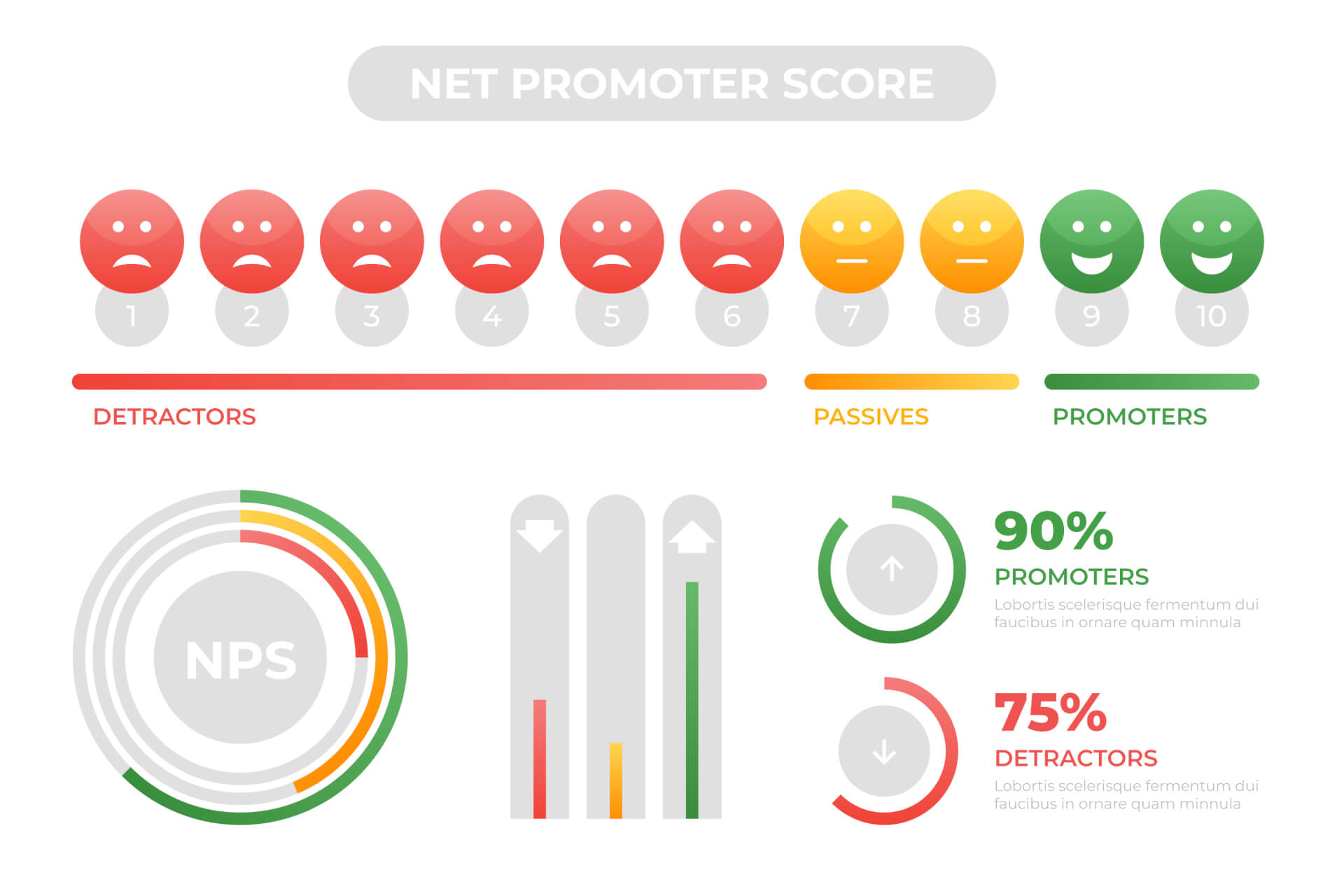 Net Promoter Score (NPS) is a metric used to measure the likelihood of customers to recommend a company's products or services to others.
It is based on a simple question: "On a scale of 0-10, how likely are you to recommend us to a friend or colleague?"
Customers are then classified into Promoters (9-10), Passives (7-8), and Detractors (0-6). The NPS score is calculated by subtracting the percentage of Detractors from the percentage of Promoters.
Importance of NPS in Business
NPS provides companies with valuable insights into customer satisfaction, loyalty, and advocacy. It helps identify areas for improvement, measure customer sentiment over time, and benchmark against competitors. By focusing on increasing the number of Promoters and reducing Detractors, businesses can drive growth, improve customer retention, and enhance their reputation.
Overview of BI & Analytics Tools
Business Intelligence (BI) and Analytics tools are essential for collecting, analyzing, and visualizing data to make informed decisions. These tools enable companies to transform raw data into actionable insights, identify trends, and track key performance indicators. By integrating NPS data with BI and Analytics tools, organizations can unlock the full potential of customer feedback and drive strategic decision-making.
Benefits of Integrating NPS with BI & Analytics Tools

Data-driven Decision Making
By integrating NPS data with BI and Analytics tools, companies can make data-driven decisions based on customer feedback and sentiment. BI tools provide a comprehensive view of customer interactions, preferences, and behaviors, allowing businesses to identify patterns, trends, and correlations that can inform strategic initiatives.
Improved Customer Insights
Integrating NPS with BI tools enables companies to gain deeper insights into customer preferences, satisfaction levels, and loyalty drivers. By analyzing NPS data alongside other customer data sources, organizations can create a 360-degree view of the customer journey, identify pain points, and personalize the customer experience.
Forecasting and Predictive Analysis
By leveraging predictive analytics tools, companies can use NPS data to forecast future trends, predict customer behavior, and anticipate market shifts. By analyzing historical NPS scores, customer feedback, and demographic data, organizations can proactively address customer needs, optimize marketing strategies, and drive business growth.
How to Integrate NPS with BI & Analytics Tools

Choosing the Right Tools
When integrating NPS with BI and Analytics tools, it is essential to select the right tools that align with your business goals and objectives. Look for tools that offer robust data integration capabilities, advanced analytics features, and customizable reporting dashboards.
Consider factors such as scalability, ease of use, and compatibility with existing systems.
Data Collection and Analysis
To effectively integrate NPS with BI tools, companies need to ensure seamless data collection, integration, and analysis processes.
Implement automated feedback collection mechanisms, integrate NPS data with CRM systems, and leverage data visualization tools to track and analyze customer feedback in real-time.
By centralizing NPS data within a unified platform, organizations can streamline data analysis and reporting workflows.
Automation and Reporting
Automation plays a key role in integrating NPS with BI and Analytics tools. Implement automated survey distribution, data processing, and reporting workflows to streamline data collection and analysis. Utilize BI tools to create interactive dashboards, visualizations, and reports that provide actionable insights and facilitate data-driven decision-making.
By automating repetitive tasks, organizations can focus on interpreting data, identifying trends, and driving strategic initiatives.
Common Challenges and Best Practices

Data Security and Privacy
One of the key challenges of integrating NPS with BI tools is ensuring the security and privacy of customer data. Implement robust data encryption protocols, access controls, and compliance measures to protect sensitive customer information.
Adhere to data privacy regulations such as GDPR, CCPA, and HIPAA to safeguard customer data and maintain trust.
Ensuring Data Accuracy
Another challenge is ensuring the accuracy and reliability of NPS data when integrating with BI tools. Implement data validation processes, data cleansing techniques, and quality assurance measures to eliminate errors, duplicates, and inconsistencies in the data.
Regularly audit data sources, validate data integrity, and establish data governance practices to maintain data accuracy and integrity.
Continuous Improvement
To maximize the benefits of integrating NPS with BI and Analytics tools, companies need to focus on continuous improvement and optimization. Monitor key performance indicators, track NPS trends, and solicit feedback from stakeholders to identify areas for enhancement.
Implement feedback loops, iterate on data analysis processes, and adapt strategies based on insights to drive continuous improvement and innovation.
Case Studies and Real-world Examples

Leveraging NPS for Growth
The company in our first example integrated NPS data with BI and Analytics tools to gain insights into customer satisfaction and loyalty. By analyzing NPS scores alongside customer behavior data, the company identified opportunities to improve product offerings, enhance customer service, and drive customer retention. As a result, the company saw a significant increase in NPS scores, customer satisfaction levels, and overall business growth.
Using BI Tools to Enhance NPS Scores
This company leveraged BI tools to analyze NPS data and identify key drivers of customer satisfaction. By segmenting customers based on NPS scores, demographics, and purchase history, the company personalized marketing campaigns, tailored product recommendations, and optimized customer interactions.
This proactive approach led to higher NPS scores, increased customer loyalty, and improved brand perception.
Predictive Analysis for Future Success
The company in our third example utilized predictive analytics tools to forecast future NPS trends and customer behavior. By analyzing historical NPS data, customer feedback, and market trends, the company predicted shifts in customer sentiment, identified potential churn risks, and proactively addressed customer needs.
This forward-thinking approach enabled the company to stay ahead of the competition, drive customer engagement, and achieve sustainable growth.
Conclusion
In conclusion, integrating NPS with BI and Analytics tools offers significant benefits for businesses looking to leverage customer feedback for strategic decision-making. By combining NPS data with advanced analytics, companies can gain deeper insights, improve customer satisfaction, and forecast future trends. However, organizations must overcome challenges such as data security, accuracy, and continuous improvement to maximize the impact of NPS integration.
By following best practices, leveraging automation, and learning from real-world examples, companies can unlock the full potential of NPS data and drive business success.
FAQ
How can NPS integration with BI tools benefit my business?
Integrating NPS with BI tools allows businesses to gain deeper insights into customer satisfaction, loyalty, and advocacy. By analyzing NPS data alongside other customer data sources, organizations can make data-driven decisions, improve customer experiences, and drive business growth.
What are the best practices for integrating NPS with analytics tools?
Best practices for integrating NPS with analytics tools include choosing the right tools, ensuring data security and privacy, and focusing on continuous improvement. By implementing automated data collection, analysis, and reporting processes, companies can streamline workflows and drive strategic decision-making.
How do I ensure the security of customer data when integrating NPS with BI tools?
To ensure the security of customer data when integrating NPS with BI tools, companies should implement robust data encryption protocols, access controls, and compliance measures. Adhering to data privacy regulations and industry standards is essential to protect sensitive customer information and maintain trust.
Can NPS data be used for predictive analysis and forecasting?
Yes, NPS data can be used for predictive analysis and forecasting by leveraging advanced analytics tools. By analyzing historical NPS scores, customer feedback, and demographic data, organizations can forecast future trends, predict customer behavior, and anticipate market shifts. This proactive approach enables companies to stay ahead of the competition and drive business growth.
Are there any risks associated with integrating NPS with BI and analytics tools?
While integrating NPS with BI and analytics tools offers significant benefits, there are risks associated with data security, accuracy, and compliance. Companies must implement robust data protection measures, ensure data accuracy, and adhere to regulatory requirements to mitigate risks and maximize the impact of NPS integration on business success.