
 Welcome to our latest blog post where we dive deep into the world of Net Promoter Score (NPS) benchmarks by industry.
In this article, we will explore what NPS is, how it is calculated, and what constitutes a good score in various industries in 2026.
Understanding NPS Benchmarks
What is NPS?
Net Promoter Score (NPS) is a metric used to measure customer loyalty and satisfaction based on the likelihood of customers to recommend a company's products or services to others. It is calculated by asking customers a single question: "On a scale of 0-10, how likely are you to recommend our company to a friend or colleague?"
How are NPS scores calculated?
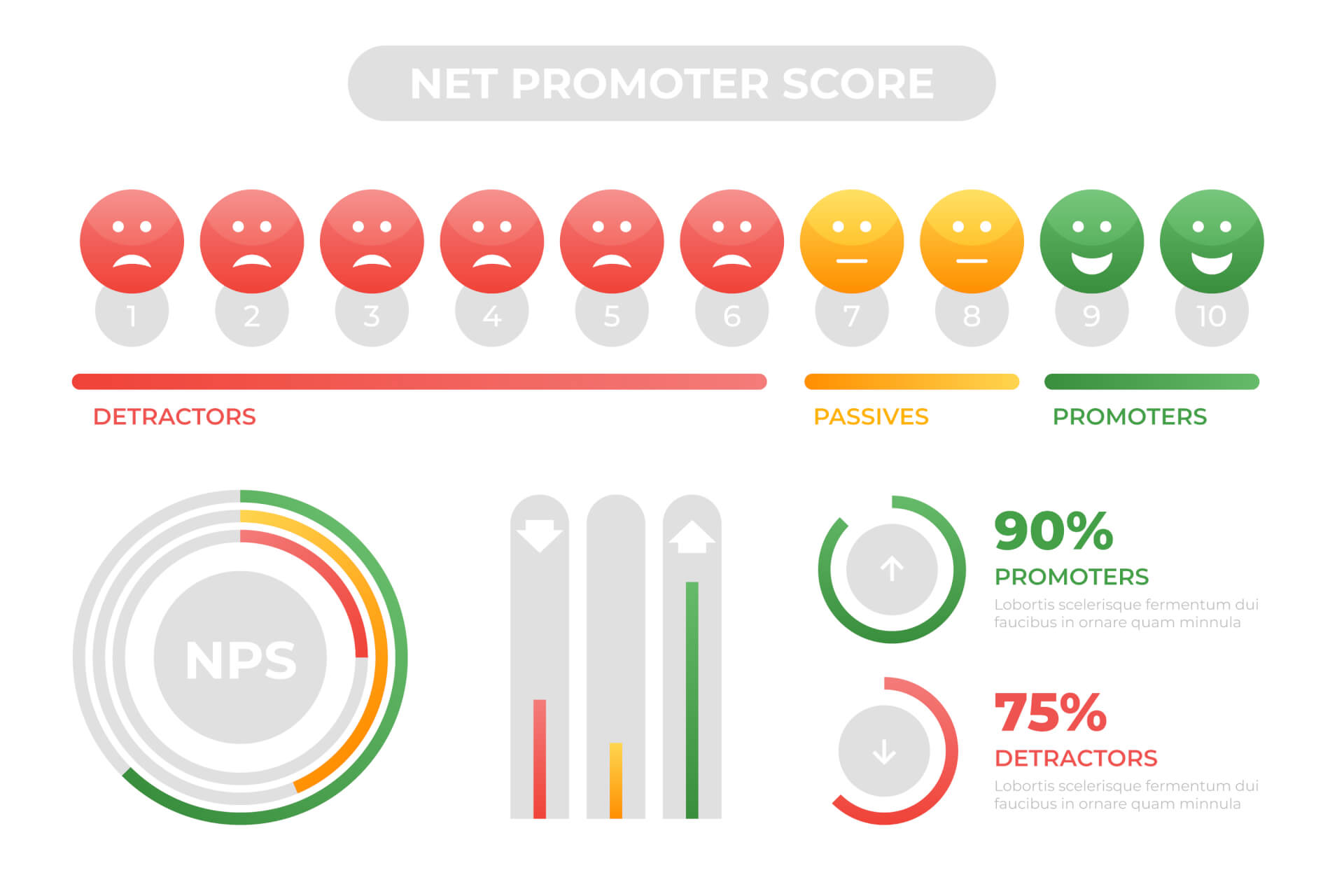
NPS scores are categorized into three groups based on the responses to the above question:
- Promoters (score 9-10): Loyal customers who are likely to recommend the company.
- Passives (score 7-8): Satisfied but not enthusiastic customers.
- Detractors (score 0-6): Unhappy customers who may damage the company's reputation.
The NPS score is calculated by subtracting the percentage of detractors from the percentage of promoters, resulting in a score between -100 and +100.
Importance of NPS Benchmarks
NPS benchmarks provide valuable insights into how a company is perceived by its customers compared to industry standards. By analyzing NPS scores, businesses can identify areas for improvement, measure customer satisfaction over time, and benchmark themselves against competitors.
NPS Benchmarks by Industry
 Technology Industry
In the technology industry, where innovation and customer experience are paramount, a good NPS score typically ranges from 50 to 70.
Companies like Apple and Google consistently achieve high NPS scores due to their focus on user-friendly products and exceptional customer service.
Retail Industry
The retail industry is highly competitive, with customer experience playing a significant role in NPS scores.
A good NPS score for retailers falls between 60 and 80, with companies like Amazon setting the benchmark for exceptional customer satisfaction and loyalty.
Healthcare Industry
In the healthcare industry, where trust and reliability are critical, a good NPS score ranges from 40 to 60. Hospitals and healthcare providers that prioritize patient care and communication often achieve high NPS scores, reflecting positive patient experiences.
Financial Services
Industry Financial services companies rely heavily on trust and transparency to maintain customer loyalty. A good NPS score for banks and financial institutions typically falls between 50 and 70, with a strong emphasis on personalized service and financial expertise.
Hospitality Industry
In the hospitality industry, where customer service is paramount, a good NPS score ranges from 70 to 90. Hotels and resorts that prioritize guest satisfaction and personalized experiences often receive high NPS scores, leading to repeat business and positive word-of-mouth referrals.
Factors Influencing NPS Scores
- Customer Experience
Customer experience plays a crucial role in determining NPS scores, as satisfied customers are more likely to become promoters of a brand.
By providing exceptional service, personalized interactions, and timely resolutions to customer issues, businesses can improve their NPS scores significantly. - Product Quality
The quality of products and services directly impacts customer satisfaction and loyalty.
Companies that consistently deliver high-quality products that meet or exceed customer expectations are more likely to receive positive NPS scores and build a loyal customer base. - Brand Reputation
A company's reputation and brand image can influence NPS scores, as customers are more likely to recommend brands they trust and respect.
By maintaining a positive reputation through ethical business practices, transparent communication, and strong customer relationships, businesses can improve their NPS scores over time.
Strategies to Improve NPS Scores
 Implementing Customer Feedback
Listening to customer feedback and acting on it is essential for improving NPS scores. By collecting and analyzing customer feedback through surveys, reviews, and social media, businesses can identify areas for improvement and implement changes to enhance the customer experience.
Enhancing Customer Support
Providing exceptional customer support is key to increasing NPS scores, as customers value quick and effective resolutions to their issues. By investing in training for support teams, implementing omnichannel support options, and prioritizing customer satisfaction, businesses can improve their NPS scores and build customer loyalty.
Personalizing Customer Interactions
Personalization is a powerful tool for increasing customer loyalty and satisfaction. By personalizing interactions based on customer preferences, purchase history, and feedback, businesses can create meaningful connections with customers and improve their NPS scores over time.
Employee Training and Engagement
Engaged and well-trained employees are essential for delivering exceptional customer experiences. By investing in employee training, promoting a positive work culture, and empowering employees to go above and beyond for customers, businesses can improve their NPS scores and create a customer-centric environment.
Leveraging Technology Solutions
Technology solutions such as CRM systems, feedback tools, and analytics platforms can help businesses improve their NPS scores by streamlining processes, capturing customer data, and identifying trends and patterns. By leveraging technology effectively, businesses can enhance the customer experience and drive higher NPS scores.
NPS Trends in 2026
Shift towards Digital
Feedback Channels In 2026, we are seeing a shift towards digital feedback channels such as social media, chatbots, and online reviews. Businesses are leveraging these channels to collect real-time feedback, engage with customers proactively, and improve their NPS scores through timely responses and personalized interactions.
Integration of AI and Machine Learning
AI and machine learning technologies are being increasingly integrated into NPS measurement and analysis. By leveraging AI algorithms to predict customer behavior, analyze sentiment, and automate feedback processes, businesses can gain valuable insights into customer preferences and improve their NPS scores over time.
Focus on Customer Journey Mapping
Customer journey mapping is becoming a critical tool for understanding and improving the customer experience. By mapping out the customer journey from initial contact to post-purchase interactions, businesses can identify pain points, optimize touchpoints, and enhance the overall customer experience to drive higher NPS scores.
Importance of Real-time Feedback
Real-time feedback is essential for capturing customer sentiments and addressing issues promptly. By collecting feedback in real-time through surveys, chatbots, and social media monitoring, businesses can respond quickly to customer concerns, improve service delivery, and boost their NPS scores in the long run.
Rise of Customer-Centric Cultures
Businesses are increasingly focusing on building customer-centric cultures that prioritize customer satisfaction and loyalty. By aligning internal processes, policies, and values with customer needs and expectations, businesses can create a customer-centric environment that drives higher NPS scores and long-term success.
 Reading Recommendation: You may also be interested in our Blog article "Top NPS Monitoring Tools to Keep Your Finger on Customer Sentiment"
Conclusion
In conclusion, NPS benchmarks by industry play a crucial role in assessing customer loyalty, satisfaction, and brand reputation. By understanding what constitutes a good NPS score in different industries, businesses can benchmark themselves against competitors, identify areas for improvement, and implement strategies to enhance customer satisfaction and loyalty.
In 2026, businesses are leveraging technology, personalization, and real-time feedback to improve their NPS scores and create customer-centric cultures that drive long-term success.
Reading recommendation: If this article helped you and you would like to find out more about the Net Promoter Score, continue reading here: “The Net Promoter Score – Basics and Areas of Application”
FAQs
How often should businesses measure their NPS scores?
Businesses should ideally measure their NPS scores regularly to track customer satisfaction and loyalty over time. While the frequency may vary depending on the industry and business goals, quarterly or bi-annual NPS surveys are common practice to monitor trends and identify areas for improvement.
Can a high NPS score guarantee business success?
While a high NPS score is a positive indicator of customer satisfaction and loyalty, it alone cannot guarantee business success. Other factors such as product quality, competitive pricing, and market trends also play a significant role in determining business success.
How can businesses leverage NPS scores to improve customer retention?
Businesses can leverage NPS scores to improve customer retention by identifying detractors and passives, addressing their concerns, and turning them into promoters. By analyzing feedback, implementing changes, and monitoring progress, businesses can enhance the customer experience and build long-term relationships with customers.
What are some common mistakes businesses make when measuring NPS scores?
Some common mistakes businesses make when measuring NPS scores include focusing solely on the score without analyzing feedback, neglecting to follow up with customers, and failing to take action based on the results. It is essential to use NPS scores as a tool for improvement and customer engagement rather than just a numerical metric.
How can businesses use NPS benchmarks to stay ahead of the competition?
By comparing their NPS scores to industry benchmarks and competitors, businesses can identify areas of strength and weakness, set performance goals, and differentiate themselves in the market. By continuously monitoring NPS scores and implementing strategies to improve customer satisfaction, businesses can stay ahead of the competition and drive long-term success.