![[EN]](data:image/png;base64,iVBORw0KGgoAAAANSUhEUgAAAB4AAAAUCAYAAACaq43EAAAAGXRFWHRTb2Z0d2FyZQBBZG9iZSBJbWFnZVJlYWR5ccllPAAAAyRpVFh0WE1MOmNvbS5hZG9iZS54bXAAAAAAADw/eHBhY2tldCBiZWdpbj0i77u/IiBpZD0iVzVNME1wQ2VoaUh6cmVTek5UY3prYzlkIj8+IDx4OnhtcG1ldGEgeG1sbnM6eD0iYWRvYmU6bnM6bWV0YS8iIHg6eG1wdGs9IkFkb2JlIFhNUCBDb3JlIDUuMy1jMDExIDY2LjE0NTY2MSwgMjAxMi8wMi8wNi0xNDo1NjoyNyAgICAgICAgIj4gPHJkZjpSREYgeG1sbnM6cmRmPSJodHRwOi8vd3d3LnczLm9yZy8xOTk5LzAyLzIyLXJkZi1zeW50YXgtbnMjIj4gPHJkZjpEZXNjcmlwdGlvbiByZGY6YWJvdXQ9IiIgeG1sbnM6eG1wPSJodHRwOi8vbnMuYWRvYmUuY29tL3hhcC8xLjAvIiB4bWxuczp4bXBNTT0iaHR0cDovL25zLmFkb2JlLmNvbS94YXAvMS4wL21tLyIgeG1sbnM6c3RSZWY9Imh0dHA6Ly9ucy5hZG9iZS5jb20veGFwLzEuMC9zVHlwZS9SZXNvdXJjZVJlZiMiIHhtcDpDcmVhdG9yVG9vbD0iQWRvYmUgUGhvdG9zaG9wIENTNiAoTWFjaW50b3NoKSIgeG1wTU06SW5zdGFuY2VJRD0ieG1wLmlpZDpERTc5MkI3RjE3OEExMUUyQTcxNDlDNEFCRkNENzc2NiIgeG1wTU06RG9jdW1lbnRJRD0ieG1wLmRpZDpERTc5MkI4MDE3OEExMUUyQTcxNDlDNEFCRkNENzc2NiI+IDx4bXBNTTpEZXJpdmVkRnJvbSBzdFJlZjppbnN0YW5jZUlEPSJ4bXAuaWlkOkEyMTE0RjIyMTc4QTExRTJBNzE0OUM0QUJGQ0Q3NzY2IiBzdFJlZjpkb2N1bWVudElEPSJ4bXAuZGlkOkRFNzkyQjdFMTc4QTExRTJBNzE0OUM0QUJGQ0Q3NzY2Ii8+IDwvcmRmOkRlc2NyaXB0aW9uPiA8L3JkZjpSREY+IDwveDp4bXBtZXRhPiA8P3hwYWNrZXQgZW5kPSJyIj8+60cYSwAAAyhJREFUeNrElN1PU3cYxz/tOQUBD/aNymtbUAq2IOiUWXmZA40Iy2BzcW53y7JlyZLtZuE/8NaY7Gbe7WJbdJnTDOdQCbLKrERUotgCSodQ7AsFpK28yKT7rfsL2gv7JCcn+eV3zpPv5/l+H9X2xp65SqtJGfr1Fg3vNPD02SIhfwRniwP3pdvsOVxPaCHGs7+DOA/VJs8crXXEs3P48OfTfMIcU+SRaqlMzm8SNut2VuefIxvyydZIxFbWyX35iviLNZRiPZJaxdLyCkoiQUyc6cwFTPvC9FRkcbJMy7JaTrmxHIuvxaZm5xW7+Jl3NkKRaRt5OVlMjvuoqa9gwr9AgS4PvTYP78hjdtVVEAw9J+Kdxv7Td+hL8tGTeslGg8Jeexk3/riLs62O+cU441NBDjbZGbg+SlNbPYvRF9zzzHCoycFA/yhvCtRqnZbr5a1YEjGm5S2po1ZXfRHVaCTlWLODq24v1eWFGPVbuXH5Dh3vORm88xhziR5zoZ5rl9y0dx/ggS/EzGSQs5Ua3s39h7CUlbri0mKdUGzmijBXqzBXYH4Z931fsmlf7zBvd+wjIigMDI/TcbyRvt+GOSgUZ62uU3S2h8IdRgrTQK1S2T6PyhpZ+aB9LxcF2hpbCUUF27hy4S+Of/wWfUMeykuNVIin9/xNuj9qYWR8juknIc5szNC1voA/DdSypayAhlor57/vp/NEC7OBRfpveek+0cwvP/7JsfedhEWcLg8+pOtkMxfOuTjc5WSrSc+S6ymSQYtGyk5dsVT9/4zbhZmu3Z5IztggXOwSZjvSuZ+hUR9mEan/KAz+PkJb5z7GngSYdXu46T9Ho3EL6ZSKnZ9Fax0W5aFrDNuB6mROA6El7BYTnns+bPt3srK2gV+QcIjIPRLzrxL3ZkLLfB0c40udRCAd1EfFNioxaSG+Sl2NmchSnCKjwh6HBWlzk/rd1uTyMOTn8MbuctRiieyqLKbKbqXs4gSvQmFephOnRCIRFW+F11yyp/3TtD/eSKjYTM4rjcZh110yUZlDPfnVqcwovkppRhRnDrX/2x+UjKDuJXcuE4r/FWAAjBMttNdoYOEAAAAASUVORK5CYII=)
If you are working to improve your customer experience and satisfaction, the Net Promoter Score (NPS) is a crucial metric that helps businesses understand how likely their customers are to recommend their products or services to others. But what are the key drivers that turn customers into promoters?
In this article, we will delve into the factors that influence NPS and explore how businesses can leverage them to create a loyal customer base.

Understanding NPS
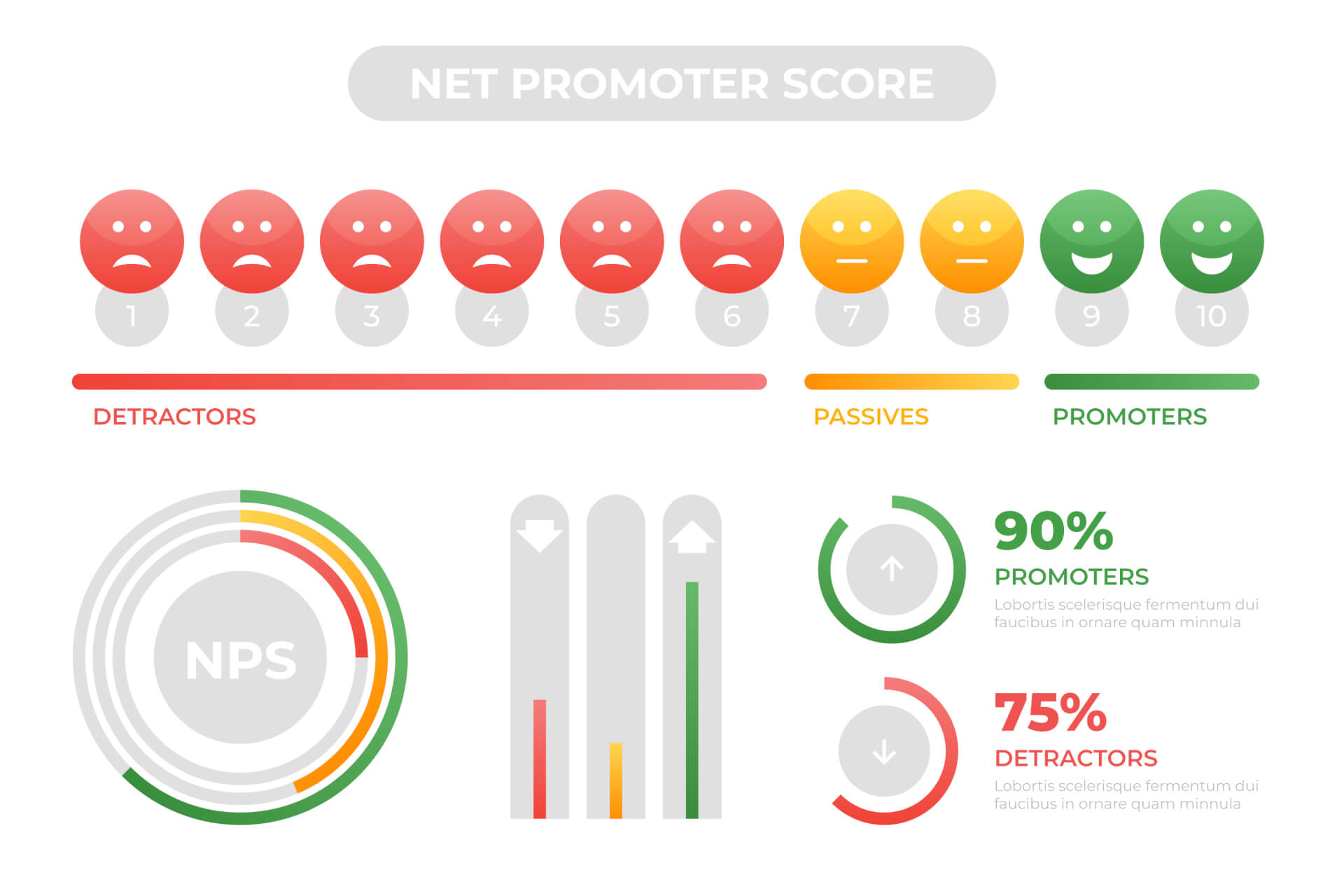
Net Promoter Score is a simple yet powerful metric that measures customer loyalty by asking one question: "On a scale of 0-10, how likely are you to recommend our company to a friend or colleague?"
Based on their responses, customers are categorized into three groups: detractors (score 0-6), passives (score 7-8), and promoters (score 9-10).
The NPS is calculated by subtracting the percentage of detractors from the percentage of promoters.
Key Drivers of NPS
- Customer Satisfaction: The most obvious driver of NPS is customer satisfaction. Satisfied customers are more likely to recommend a company to others, leading to a higher NPS score.
- Customer Experience: A positive customer experience can significantly impact NPS. From seamless interactions to personalized service, every touchpoint plays a role in shaping customer perceptions.
- Product Quality: Customers are more likely to become promoters if they are happy with the quality of the products or services they receive. Consistent quality builds trust and loyalty.
- Brand Reputation: A strong brand reputation can influence NPS by instilling confidence in customers and making them proud to be associated with the brand.
- Customer Service: Responsive and efficient customer service can turn detractors into promoters by addressing their issues and going above and beyond to meet their needs.
Strategies for Improving NPS
- Collect Feedback: Regularly gather feedback from customers to understand their needs and preferences. Use surveys, interviews, and social media monitoring to capture insights.
- Act on Insights: Use customer feedback to identify areas for improvement and take action to address them. Show customers that their feedback is valued and acted upon.
- Reward Loyalty: Implement loyalty programs and incentives to reward customers for their repeat business and referrals. Encourage them to become brand advocates.
- Empower Employees: Train and empower employees to deliver exceptional customer service. Equip them with the tools and resources they need to exceed customer expectations.
- Monitor and Measure: Continuously monitor NPS scores and track changes over time. Use data analytics to identify trends and patterns that can inform strategic decisions.
Conclusion
In conclusion, understanding the key drivers of NPS is essential for businesses looking to build a loyal customer base and drive growth. By focusing on customer satisfaction, experience, product quality, brand reputation, and customer service, companies can create a positive feedback loop that turns customers into promoters.
By implementing strategies to improve NPS, businesses can strengthen their relationships with customers and ultimately drive long-term success.
Reading recommendation: If this article helped you and you would like to find out more about the Net Promoter Score, continue reading here: “The Net Promoter Score – Basics and Areas of Application”
FAQs
What is a good NPS score?
A good NPS score typically falls between 50-70, with scores above 70 considered excellent.
How can I calculate NPS for my business?
To calculate NPS, subtract the percentage of detractors from the percentage of promoters in your customer base.
Can NPS be used to predict customer behavior?
Yes, NPS is a reliable indicator of customer loyalty and can help predict future customer behavior.
How often should I measure NPS?
It is recommended to measure NPS regularly, such as quarterly or annually, to track changes over time.
What are some common pitfalls to avoid when using NPS?
Common pitfalls include focusing solely on the score without addressing underlying issues, not acting on feedback, and failing to communicate NPS results internally.