![[EN]](data:image/png;base64,iVBORw0KGgoAAAANSUhEUgAAAB4AAAAUCAYAAACaq43EAAAAGXRFWHRTb2Z0d2FyZQBBZG9iZSBJbWFnZVJlYWR5ccllPAAAAyRpVFh0WE1MOmNvbS5hZG9iZS54bXAAAAAAADw/eHBhY2tldCBiZWdpbj0i77u/IiBpZD0iVzVNME1wQ2VoaUh6cmVTek5UY3prYzlkIj8+IDx4OnhtcG1ldGEgeG1sbnM6eD0iYWRvYmU6bnM6bWV0YS8iIHg6eG1wdGs9IkFkb2JlIFhNUCBDb3JlIDUuMy1jMDExIDY2LjE0NTY2MSwgMjAxMi8wMi8wNi0xNDo1NjoyNyAgICAgICAgIj4gPHJkZjpSREYgeG1sbnM6cmRmPSJodHRwOi8vd3d3LnczLm9yZy8xOTk5LzAyLzIyLXJkZi1zeW50YXgtbnMjIj4gPHJkZjpEZXNjcmlwdGlvbiByZGY6YWJvdXQ9IiIgeG1sbnM6eG1wPSJodHRwOi8vbnMuYWRvYmUuY29tL3hhcC8xLjAvIiB4bWxuczp4bXBNTT0iaHR0cDovL25zLmFkb2JlLmNvbS94YXAvMS4wL21tLyIgeG1sbnM6c3RSZWY9Imh0dHA6Ly9ucy5hZG9iZS5jb20veGFwLzEuMC9zVHlwZS9SZXNvdXJjZVJlZiMiIHhtcDpDcmVhdG9yVG9vbD0iQWRvYmUgUGhvdG9zaG9wIENTNiAoTWFjaW50b3NoKSIgeG1wTU06SW5zdGFuY2VJRD0ieG1wLmlpZDpERTc5MkI3RjE3OEExMUUyQTcxNDlDNEFCRkNENzc2NiIgeG1wTU06RG9jdW1lbnRJRD0ieG1wLmRpZDpERTc5MkI4MDE3OEExMUUyQTcxNDlDNEFCRkNENzc2NiI+IDx4bXBNTTpEZXJpdmVkRnJvbSBzdFJlZjppbnN0YW5jZUlEPSJ4bXAuaWlkOkEyMTE0RjIyMTc4QTExRTJBNzE0OUM0QUJGQ0Q3NzY2IiBzdFJlZjpkb2N1bWVudElEPSJ4bXAuZGlkOkRFNzkyQjdFMTc4QTExRTJBNzE0OUM0QUJGQ0Q3NzY2Ii8+IDwvcmRmOkRlc2NyaXB0aW9uPiA8L3JkZjpSREY+IDwveDp4bXBtZXRhPiA8P3hwYWNrZXQgZW5kPSJyIj8+60cYSwAAAyhJREFUeNrElN1PU3cYxz/tOQUBD/aNymtbUAq2IOiUWXmZA40Iy2BzcW53y7JlyZLtZuE/8NaY7Gbe7WJbdJnTDOdQCbLKrERUotgCSodQ7AsFpK28yKT7rfsL2gv7JCcn+eV3zpPv5/l+H9X2xp65SqtJGfr1Fg3vNPD02SIhfwRniwP3pdvsOVxPaCHGs7+DOA/VJs8crXXEs3P48OfTfMIcU+SRaqlMzm8SNut2VuefIxvyydZIxFbWyX35iviLNZRiPZJaxdLyCkoiQUyc6cwFTPvC9FRkcbJMy7JaTrmxHIuvxaZm5xW7+Jl3NkKRaRt5OVlMjvuoqa9gwr9AgS4PvTYP78hjdtVVEAw9J+Kdxv7Td+hL8tGTeslGg8Jeexk3/riLs62O+cU441NBDjbZGbg+SlNbPYvRF9zzzHCoycFA/yhvCtRqnZbr5a1YEjGm5S2po1ZXfRHVaCTlWLODq24v1eWFGPVbuXH5Dh3vORm88xhziR5zoZ5rl9y0dx/ggS/EzGSQs5Ua3s39h7CUlbri0mKdUGzmijBXqzBXYH4Z931fsmlf7zBvd+wjIigMDI/TcbyRvt+GOSgUZ62uU3S2h8IdRgrTQK1S2T6PyhpZ+aB9LxcF2hpbCUUF27hy4S+Of/wWfUMeykuNVIin9/xNuj9qYWR8juknIc5szNC1voA/DdSypayAhlor57/vp/NEC7OBRfpveek+0cwvP/7JsfedhEWcLg8+pOtkMxfOuTjc5WSrSc+S6ymSQYtGyk5dsVT9/4zbhZmu3Z5IztggXOwSZjvSuZ+hUR9mEan/KAz+PkJb5z7GngSYdXu46T9Ho3EL6ZSKnZ9Fax0W5aFrDNuB6mROA6El7BYTnns+bPt3srK2gV+QcIjIPRLzrxL3ZkLLfB0c40udRCAd1EfFNioxaSG+Sl2NmchSnCKjwh6HBWlzk/rd1uTyMOTn8MbuctRiieyqLKbKbqXs4gSvQmFephOnRCIRFW+F11yyp/3TtD/eSKjYTM4rjcZh110yUZlDPfnVqcwovkppRhRnDrX/2x+UjKDuJXcuE4r/FWAAjBMttNdoYOEAAAAASUVORK5CYII=)
Today, customer loyalty is more important than ever. Companies are constantly looking for ways to measure and improve customer loyalty, and one of the most popular methods is Net Promoter Score (NPS).
In this article, we will explore why NPS is considered the gold standard for measuring customer loyalty and how it can benefit businesses of all sizes.

What is NPS?
Net Promoter Score (NPS) is a metric used to measure customer loyalty and satisfaction. It is based on the simple question: "How likely are you to recommend our company/product/service to a friend or colleague?"
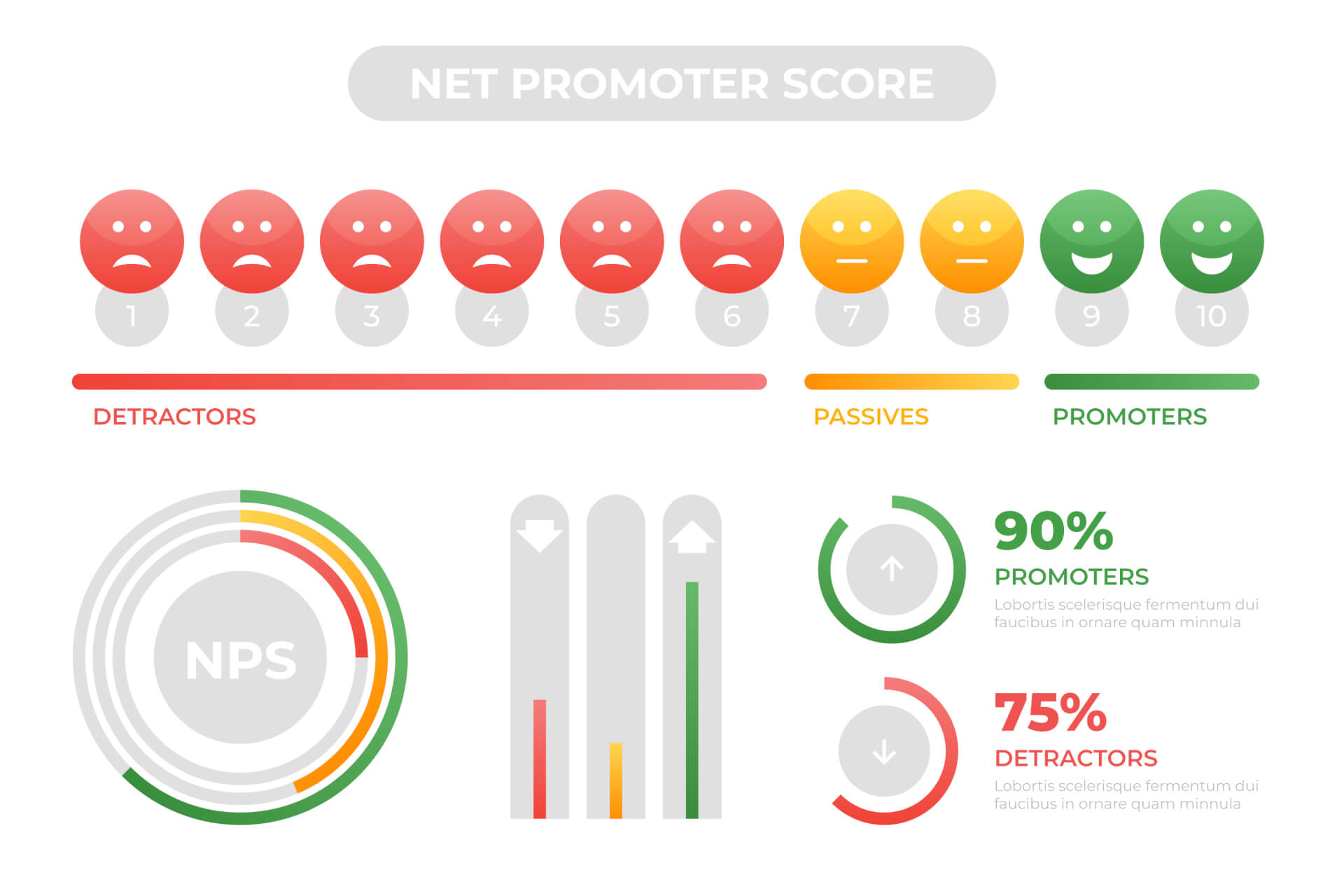
Customers are then asked to rate their likelihood on a scale of 0 to 10. Those who respond with a 9 or 10 are considered promoters, 7 or 8 are passives, and 0 to 6 are detractors.
Benefits of Using NPS

Simplicity
One of the main reasons why NPS is so popular is its simplicity. The question is straightforward, and the scoring system is easy to understand.
This makes it easy for customers to provide feedback and for businesses to analyze the results.
Actionable Insights
NPS provides actionable insights that businesses can use to improve customer loyalty.
By identifying promoters, passives, and detractors, companies can focus their efforts on turning passives into promoters and addressing the issues that are causing detractors to be unhappy.
Benchmarking
NPS allows businesses to benchmark their performance against industry standards and competitors. This can help companies identify areas where they are excelling and areas where they need to improve in order to stay ahead of the competition.
Predictive Power
Research has shown that NPS is a strong predictor of future business growth. Companies with high NPS scores tend to have higher customer retention rates, increased customer referrals, and ultimately, higher profits.
How to Implement NPS
Implementing NPS in your business is relatively simple. Here are a few steps to get started:
- Ask the NPS Question:
Begin by asking customers the NPS question: "How likely are you to recommend our company/product/service to a friend or colleague?" Make sure to provide a scale of 0 to 10 for customers to rate their likelihood. - Calculate Your NPS Score:
Calculate your NPS score by subtracting the percentage of detractors from the percentage of promoters. The resulting score can range from -100 to 100. - Act on Feedback:
Use the feedback from NPS surveys to make improvements to your products, services, and overall customer experience. Address any issues that are causing detractors to be unhappy and focus on turning passives into promoters.
Conclusion
Net Promoter Score (NPS) is widely regarded as the gold standard for measuring customer loyalty for good reason. Its simplicity, actionable insights, benchmarking capabilities, and predictive power make it a valuable tool for businesses looking to improve customer loyalty and drive growth.
By implementing NPS in your business and taking action on the feedback received, you can build stronger relationships with your customers and ultimately, increase your bottom line.
Reading recommendation: If this article helped you and you would like to find out more about the Net Promoter Score, continue reading here: “The Net Promoter Score – Basics and Areas of Application”
FAQs
What is a good NPS score?
A good NPS score typically falls between 50 and 70, but this can vary by industry. It's important to benchmark your score against industry standards and competitors.
How often should I survey customers using NPS?
It's recommended to survey customers using NPS on a regular basis, such as quarterly or bi-annually, to track changes in customer loyalty over time.
Can NPS be used for all types of businesses?
Yes, NPS can be used for businesses of all sizes and industries. It is a versatile metric that can provide valuable insights into customer loyalty regardless of the type of business.
How can I encourage customers to participate in NPS surveys?
Offering incentives, keeping the survey short and simple, and explaining the purpose of the survey can help encourage customers to participate in NPS surveys.
What other metrics should I use in conjunction with NPS?
While NPS is a powerful metric for measuring customer loyalty, it can be beneficial to also track metrics such as customer satisfaction (CSAT), customer retention rate, and customer lifetime value to gain a more comprehensive understanding of your customers' experiences.